The Answers Arrived First
On October 6, 2026, OpenAI released 719 mathematics manuscripts written by an unreleased model. Four of them claim answers to questions a ten-year-old can ask — how many colours a plane needs, how fast big numbers multiply, how few times the rails in a 1944 brick factory must cross, and whether a perfectly known gas has only one future. Each met a different response: specialists reading, a crowd building on it before it was checked, a field waiting, and a prediction arriving. None is verified yet. A machine check confirms a statement; a field accepts a result when people can explain it — and each of the four comes with a problem playground where the reader can meet the problem before the answer.
Past What Anyone Proved by Hand
The page shows four red kilns and four blue storage yards, every kiln joined to every yard by a straight rail, and a counter of the places where rails cross. Drag the pieces around and the counter moves. The target, four, is the best known. Add kilns and yards, one press at a time, and the target climbs. At seven of each, a line appears under the counter: You are now past what anyone proved by hand. This size took a computer, in 1993.
The question behind it is eighty-two years old. Pál Turán asked it in July 1944 as a forced labourer in a brick factory near Budapest, where the carts of bricks jumped the rails at every crossing. In his own account, published in 1977: “the trouble was only at the crossings.” A child can hold the question. Nobody has been able to settle it for every size.
In October 2026 a paper arrived claiming to settle it, for every size, in sixteen pages. It was one of hundreds that arrived the same day.
Seven Hundred and Nineteen Papers
On October 6, OpenAI published 719 mathematics manuscripts, written by an unreleased model and grouped into 372 results. Some come with statements checked by machine in the proof language Lean. The next day the repository's change history recorded three papers withdrawn over a sign error and fourteen revised. That is what correction looks like when it is done in the open, and it is worth noticing before anything else.
A release that size is impossible to read. What is possible is to pick a few results and follow them: what each claims, what was known before, and what the people who know the problem did next. Four results were followed that way, each into a StratIQX case study, and each case came with a page where the problem can be tried rather than read about. They share one thing. Every question fits in a sentence a ten-year-old could ask.
Four Questions Anyone Can Hold
Four problem playgrounds
Each opens the real thing
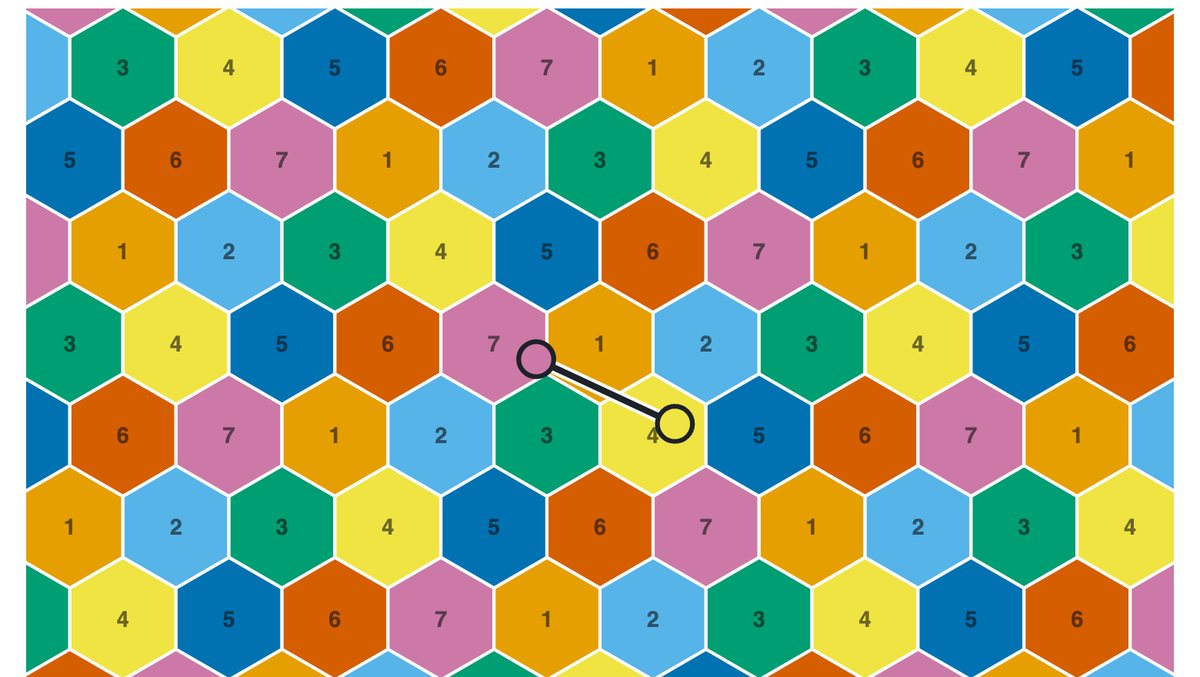
Asked in 1950
How few colours does a flat plane need, if points one unit apart must differ?
Claimed: five are not enough · not yet reviewed
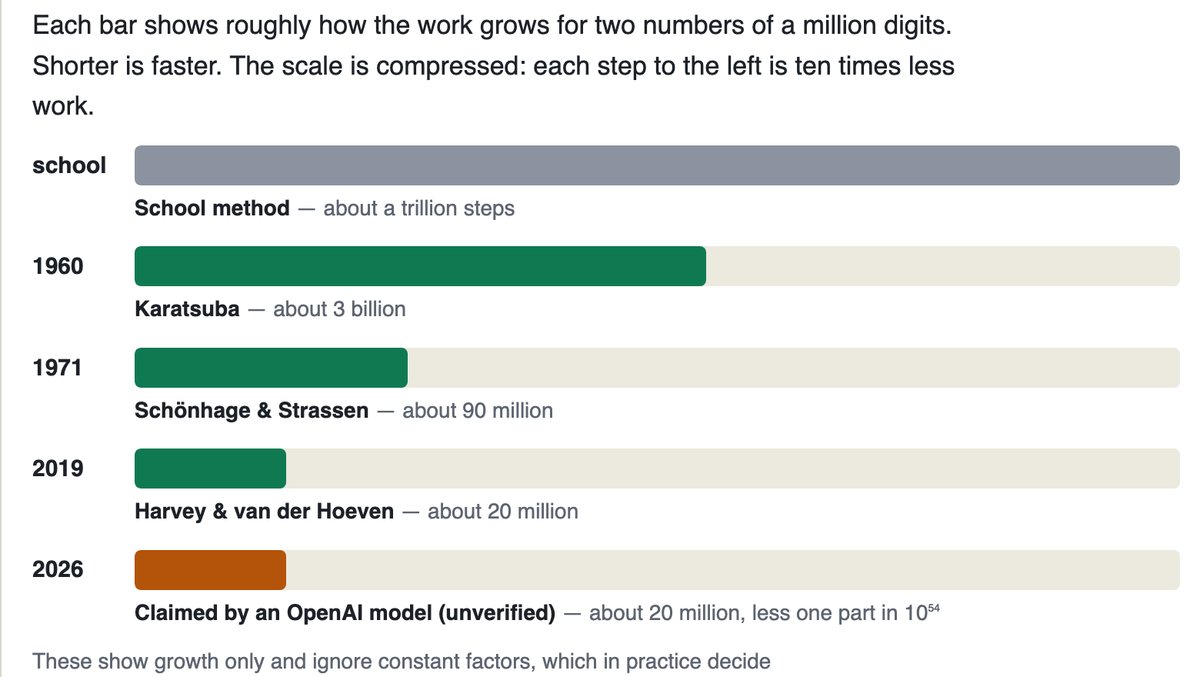
Asked in 1960
How fast can two very large numbers be multiplied?
Claimed: past the 2019 limit · not yet reviewed
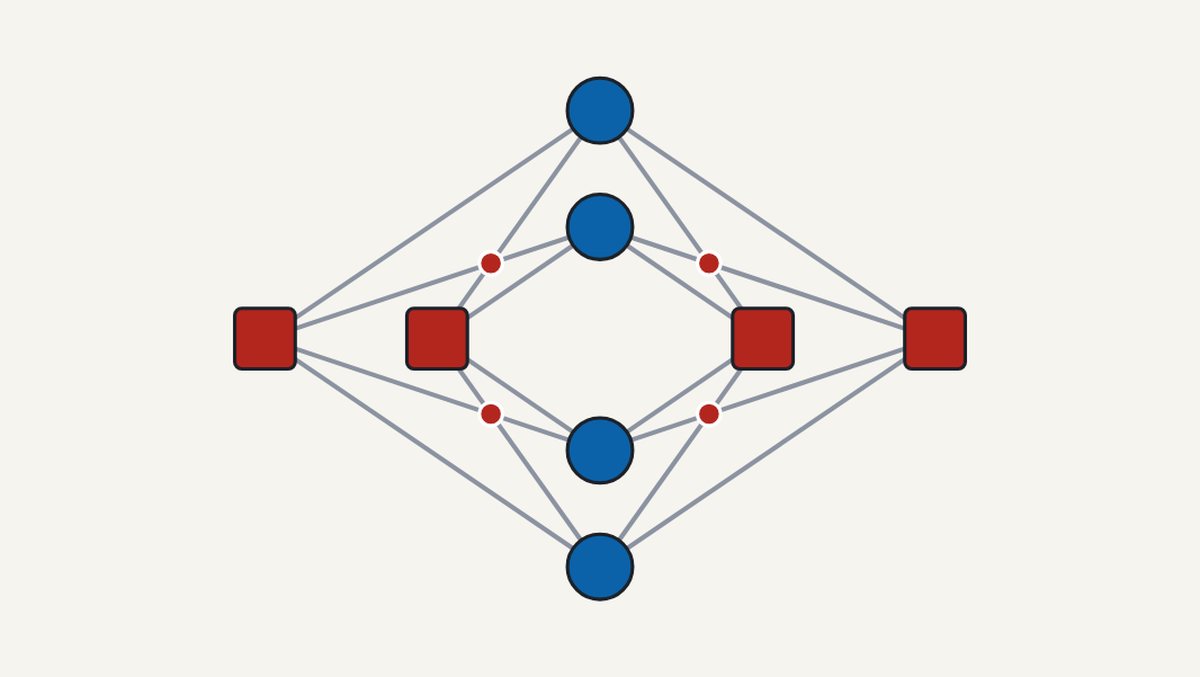
Asked in 1944
How few times must the rails cross between every kiln and every yard?
Claimed: the 1950s formula holds · not yet reviewed
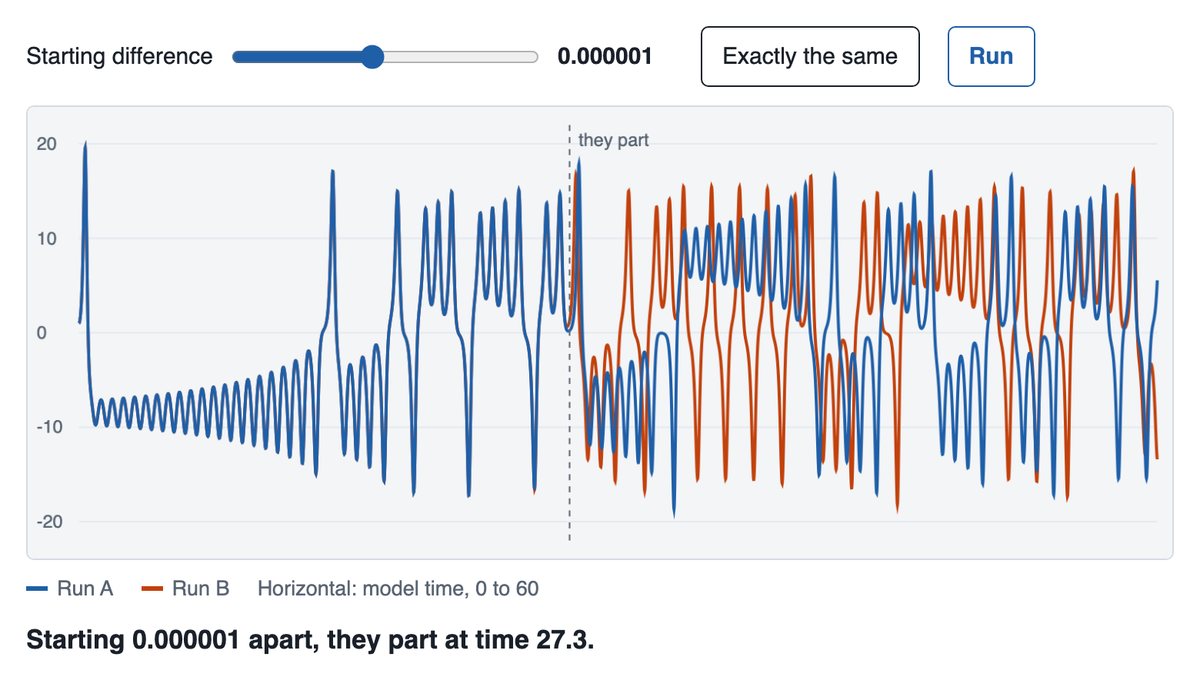
Asked since 1872
Does a perfectly known gas have only one future?
Claimed: not always · not yet reviewed
Added since: three more playgrounds from the same release
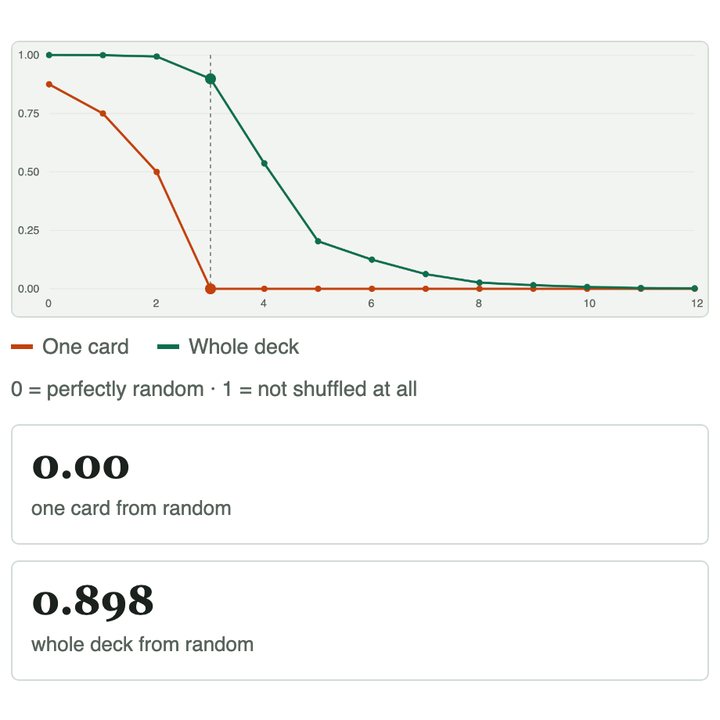
Asked since 1973
Cut a deck in half and let a coin decide each pair: how many rounds until it is random?
After three shuffles every one of eight cards is random, yet most orders of the deck are still impossible. The main statement is machine-checked; a week on, nobody had discussed it. That is Every Card Is Random. The Deck Isn’t.
Claimed: the right growth rate, settled · not yet reviewed
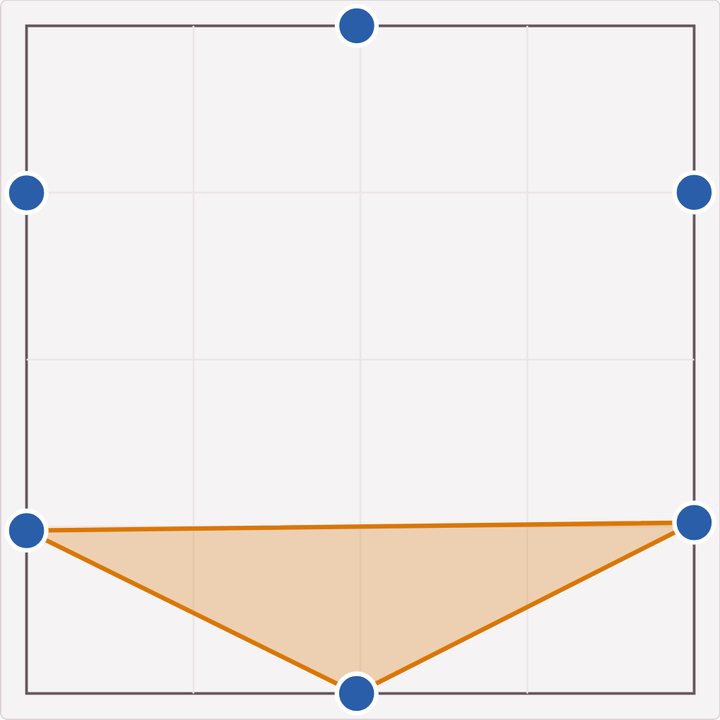
Asked before 1951
Put dots in a square: how large can the smallest triangle among them be?
The claim is for every number of dots; the machine check covers infinitely many. Telling those apart is the lesson of Infinitely Many Is Not Every.
Claimed: the “almost 1/n²” limit is false · not yet reviewed
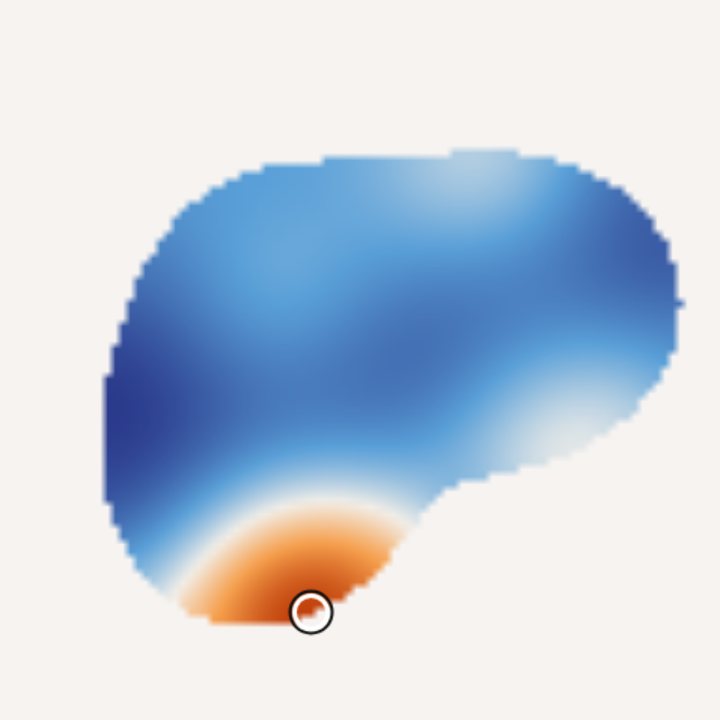
Asked in 1974
Heat a plate with insulated edges: does the last hot spot always end up on the edge?
Two days after a machine-checked proof for smooth plates, the mathematician who posed that case extended it with ChatGPT, and asked for equal credit with a colleague who did the same. That is Answered in Kind.
Claimed: true for every smooth plate with no holes · not yet reviewed
Colour every point of a flat surface so that two points exactly one unit apart never match. Since 1950 the answer has been known only to be four, five, six or seven. Multiply two enormous numbers. Since a student beat the school method in 1960, the record has dropped again and again, to a limit reached in 2019 that its authors called “the end of the road for this problem.” Lay the rails in Turán's yard. And: if the position and speed of every molecule of a gas were known exactly, would its future be fixed?
The playgrounds do not prove anything. What they do is put the difficulty in the reader's hands. Turn the ruler on the hexagons and see why seven colours always work. Drag the kilns and fail to beat the target. Run a weather model twice from starts a trillionth apart and watch the runs part — then run it from exactly the same start and watch them never part. Nobody outside a specialist field can check a sixty-page proof. Anybody can feel why the question was hard.
Four Ways a Field Responds
The four claims got four different receptions, and the differences are the real story.
For the plane, specialists started reading. The paper claims five colours are not enough. Two days after the release, Aubrey de Grey — the biologist who raised the floor from four to five in 2018 — wrote to the community project that had worked on the problem since: “OK guys, let's have a proper stab at understanding this paper – if anyone can do so it's us” (Polymath16 thread). That is Five Colours Are Not Enough.
For multiplication, a crowd started building. The claimed gain is about one part in 1054 on a number too large to write down. A public project opened the next day and, within six days, had sharpened the key constant by about fifty-two orders of magnitude, every step labelled as conditional on a paper that has no machine-checked proof. That is Faster Than Anyone Could Notice.
For the brick factory, the field waited. No specialist commented. When the claim was added to Wikipedia, a long-standing editor removed it within six hours: “let's wait until we have published reliable sources.” That is The Trouble Was Only at the Crossings.
For the gas, a prediction arrived. Seven weeks before the release, three mathematicians had conjectured in print that the standard solutions of Boltzmann's 1872 equation are not unique, and expected their own methods to get there. The release claimed it: one starting state, two futures. That is Same Gas, Two Futures.
Checked Is Not Understood
It would be easy to read the machine checks as the end of the matter. They are not, and the papers do not pretend otherwise. A Lean check confirms that a precisely stated claim follows from precisely stated rules. It cannot confirm that the statement says what the field means by the problem, and it says nothing about whether anyone understands why it is true. For the gas, the check covers only the weaker of two papers; the scope note says the stronger version is “outside it.”
The brick factory already knows what happens when acceptance comes before understanding. In 1954 Kazimierz Zarankiewicz published a solution, and it was cited as settled for about a decade. Then two mathematicians found, independently, a gap that has never been filled. The layout he proposed was never beaten. The proof that it could not be beaten was gone.
A field accepts a result when people can explain it, not when it has been produced.
Producing answers just became fast. Explaining them did not, and nothing in the release changes how long that takes.
Seen that way, the Wikipedia editor and the Polymath group were doing the same work. One declined to record the answer before it was understood. The other set out to understand it. The crowd building on the multiplication bound did the third possible thing, and labelled it honestly: improve first, verify later, with every step marked conditional.
Where the Understanding Happens
None of the four claims has been verified by specialists. The case studies say so on their first screen, and each is scheduled for review in January 2027, when there may be more to say. What can be said now is narrower. Understanding a result is something people do, and it cannot be handed over with the result. It happens in seminar rooms, in comment threads, in a specialist posting a related paper early — and, at a much smaller scale, in a reader dragging a kiln across a yard until the reason the target will not drop becomes obvious.
That is the case for a playground. It is not a summary of the proof; it could not be. It is a place to meet the problem before the answer, which is the order everyone who ever understood one of these questions met them in.
The Answers Arrived First
The general shape is older than any of these papers. When answers can be produced faster than they can be understood, the scarce work moves: to choosing which questions are worth asking, to checking that an answer means what it claims, and to the slow business of making a result part of what a field actually knows. Machines can now do a great deal of the first half. The second half is still people, and it still runs at the speed of people.
In the brick-factory playground the counter still stops at four for four kilns and four yards, however the pieces are dragged. Press the plus button until the line appears — past what anyone proved by hand — and the page is honest about the rest: proven by computer up to a point, claimed beyond it in 2026, and not yet checked by the people who will decide whether Turán's question is finally closed.
The four cases
Five Colours Are Not Enough ↗
UC-328 · specialists reading a machine’s proof of a 1950 colouring question.
Faster Than Anyone Could Notice ↗
UC-329 · a crowd building on an unverified multiplication bound.
The Trouble Was Only at the Crossings ↗
UC-330 · a field waiting on Turán’s brick factory problem.
Same Gas, Two Futures ↗
UC-331 · a predicted result arriving for Boltzmann’s 1872 equation.
Related
What the Gauntlet Can't See
Trusting what survives the checks instead of reading the work — and what that misses.
What a Seal Actually Proves
A check can be accurate about everything it saw, and still not be the whole story.
The Validator That Can't Lie
The trustworthy statement of a rule is the one the system enforces.